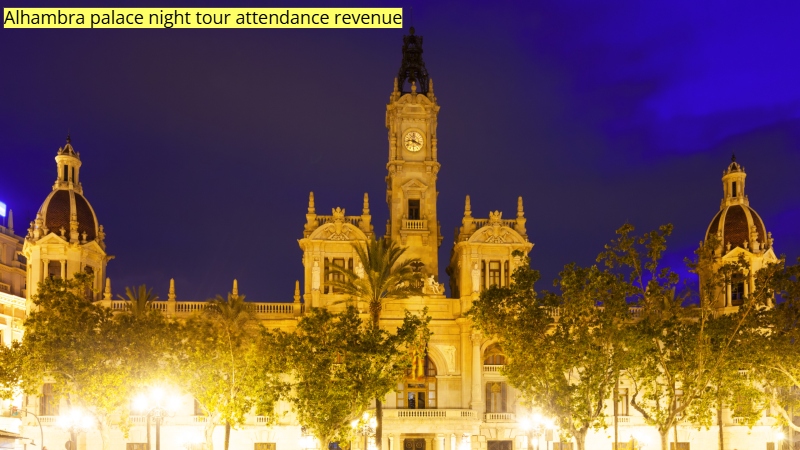
The Alhambra night tours attract global attention because they offer rare access to one of the world’s most important heritage sites after sunset. People often analyze this experience through Alhambra Palace night tour attendance revenue, which explains how income forms from limited evening entry.
The Alhambra does not run night tours like mass tourism attractions. It controls access, limits crowd size, and focuses on experience quality. This creates a stable financial model where value per visitor matters more than total visitor volume.
How night tours operate inside the Alhambra
The Alhambra manages night tours through strict scheduling and controlled entry. Visitors enter in fixed time slots and move through selected areas under supervision.
The management team prioritizes preservation at every step. It limits access to protect fragile architecture and maintain the long-term integrity of the monument.
This controlled system directly shapes Alhambra Palace night tour attendance revenue, since the site cannot expand visitor numbers beyond safe limits.
Attendance levels and demand imbalance
Night attendance remains intentionally low. Only a small number of visitors can enter each session, usually a few hundred at most.
Demand stays consistently high throughout the year. Many travelers want the experience, but limited capacity restricts access.
This gap between demand and availability creates a stable financial pattern. The system keeps Alhambra Palace night tour attendance revenue predictable because it does not increase entry volume even during peak seasons.
Pricing strategy and revenue logic
Ticket pricing plays a central role in the financial model. Night tickets cost more than daytime entry because they offer a quieter environment, controlled access, and enhanced lighting effects.
The Alhambra uses a value-based pricing approach. It increases revenue per visitor instead of increasing visitor numbers.
This strategy strengthens Alhambra Palace night tour attendance revenue while maintaining strict conservation rules.
Scarcity and visitor behavior
Limited availability shapes visitor behavior strongly. Night tour tickets often sell out early, especially during peak travel months.
The Alhambra does not increase supply even when demand rises. It maintains strict limits to protect the monument.
This controlled scarcity supports steady Alhambra Palace night tours attendance revenue and ensures long-term sustainability.
Experience quality and perceived value
Night tours deliver a premium cultural experience. Soft lighting highlights architectural details, and reduced crowd density creates a calm atmosphere.
Visitors engage more deeply with the history and design of the site during these tours. The experience feels more personal and immersive compared to daytime visits.
This strong perceived value allows higher pricing and supports Alhambra Palace night tour attendance revenue without increasing visitor volume.
Operational restrictions and preservation needs
Strict preservation rules control every aspect of night tour operations. Staff regulate movement, manage lighting systems, and protect sensitive areas inside the complex.
These operational constraints exist to prevent damage to the structure. They also define the maximum number of visitors allowed per session.
Because of these limits, Alhambra Palace night tours attendance revenue remains naturally capped and cannot scale freely.
Position within the overall Alhambra economy
Night tours form only a small part of total Alhambra tourism income. Daytime visits generate most revenue due to higher visitor volume.
However, night tours serve an important role. They add a premium segment that enhances the cultural value of the site.
Within this structure, Alhambra Palace night tours attendance revenue functions as a niche but stable income stream rather than the main financial driver.
Future outlook of night tour revenue
The future of night tour revenue will remain stable because preservation will continue to guide decision-making. The Alhambra will not increase capacity significantly.
Instead, it may improve visitor management systems and refine the booking experience. It may also adjust pricing gradually to maintain sustainability.
Despite these changes, the overall structure will remain the same, and Alhambra Palace night tour attendance revenue will continue to operate within controlled limits.
Conclusion
The Alhambra night tour system demonstrates how cultural heritage sites can balance financial sustainability with preservation responsibility. It avoids mass tourism and focuses on controlled access and high-value experiences.
This approach creates stable income while protecting one of the world’s most important historical monuments. In the long run, Alhambra Palace night tours attendance revenue will remain a carefully managed, experience-driven, and conservation-focused financial model rather than a high-volume tourism system.
Visit Tophomeinsight.com for more details.