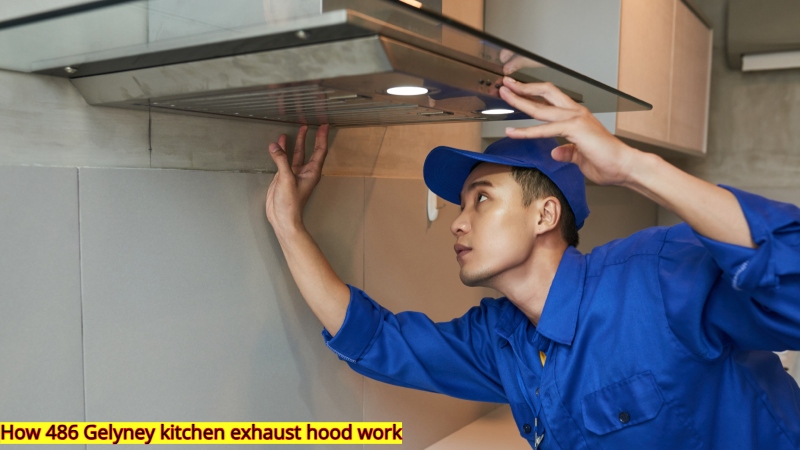
Understanding how 486 gelyney kitchen exhaust hood work is not just about knowing how a kitchen appliance turns on and off. It is about understanding how air behaves inside a closed space and how a simple mechanical system can completely change the cooking environment. A kitchen hood is designed to control smoke, heat, oil particles, and odours that naturally come from cooking, especially frying and grilling.
In modern kitchens, air quality becomes poor very quickly. Without proper ventilation, grease settles on cabinets, humidity increases, and the room becomes uncomfortable. This is where the exhaust hood plays a practical role by continuously managing airflow.
The core idea behind how 486 gelyney kitchen exhaust hood work
The working principle is based on controlled air movement. When the hood is activated, it creates a pressure difference that pulls contaminated air upward from the cooking surface.
Instead of letting smoke spread across the kitchen, the system captures it at the source. The air is then processed through internal components that separate grease and reduce odour before releasing it back or pushing it outside.
So, the system does not “clean air magically”. It physically moves air, filters it, and redirects it in a controlled way.
This is the foundation of how 486 Gelyney kitchen exhaust hood work.
Air movement process inside the system
Once the hood is switched on, the motor starts rotating a fan at high speed. This rotation creates suction force. That suction pulls rising hot air, smoke, and oil particles into the hood opening.
The key point here is timing. Heat and smoke naturally rise due to temperature differences. The hood simply captures this rising airflow before it spreads across the room.
Inside the unit, air first slows down slightly as it enters a wider chamber. This change in speed helps separate heavier grease particles from lighter air molecules. This is an important stage in how 486 Gelyney kitchen exhaust hood work, because it protects the internal motor system from oil damage.
Role of grease filtration in performance
After air enters the hood, it passes through a grease filtration layer. This is usually a metal mesh structure designed to trap oil particles.
Grease is heavier than air, so it sticks to the filter surface instead of moving further inside the system. Over time, these particles accumulate and must be cleaned to maintain performance.
If this step is ignored, airflow becomes restricted, suction power drops, and the system becomes less effective. This is why the filter condition directly affects how 486 Gelyney kitchen exhaust hood work in real use.
Internal airflow control and motor behavior
The motor is the main driving force of the system. It determines how fast air is pulled and how efficiently smoke is removed.
At low speed, the system maintains gentle airflow suitable for light cooking. At higher speeds, suction becomes stronger, which is required during frying or grilling when smoke production increases.
The motor also controls noise levels. Higher speed usually produces more sound because of increased air turbulence. This balance between power and noise is an important engineering part of how the 486 Gelyney kitchen exhaust hood works.
Two air handling methods in operation
Kitchen exhaust systems generally work in two modes depending on the installation setup.
In the first method, air is directed outside through a duct system. This method removes smoke completely from indoor space and provides the strongest performance. It is considered the most effective form of ventilation.
In the second method, air is cleaned internally using carbon-based filtration before being released back into the kitchen. This method does not require external piping, but its efficiency depends heavily on filter quality and maintenance.
Both systems are part of how 486 Gelyney kitchen exhaust hoods work, but their effectiveness depends on usage conditions.
Odor and heat control mechanism
Cooking produces not only visible smoke but also invisible particles and strong odours. The hood manages both by continuously cycling air through its internal system.
Heat is reduced by pulling hot air upward before it spreads across the room. Odours are either absorbed by filters or removed through external ventilation.
This process creates a noticeable improvement in indoor comfort, especially in closed kitchens where airflow is limited.
Installation impact on real performance
Even a high-quality exhaust hood can perform poorly if installed incorrectly. Distance from the stove, height above cooking surface, and duct alignment all affect suction efficiency.
If the hood is placed too high, smoke disperses before reaching it. If duct pathways are blocked or bent excessively, airflow becomes weak.
This shows that how 486 Gelyney kitchen exhaust hood work is not only about the machine itself but also about how it is installed and positioned in the kitchen environment. Visit Tophomeinsight.com for more details.
Maintenance behavior and long-term efficiency
Performance does not remain constant without maintenance. Grease filters gradually collect oil, which reduces airflow if not cleaned regularly.
In systems that use odour filters, these components also lose effectiveness over time and need replacement.
When maintenance is ignored, the motor works harder, energy consumption increases, and overall suction performance drops. This directly affects the real-world outcome of how 486 Gelyney kitchen exhaust hood work.
Energy use and operational balance
The system is designed to balance airflow power with energy efficiency. Low and medium settings consume less electricity, while high speed increases both power usage and performance.
Instead of running at full speed continuously, users typically adjust settings based on cooking intensity. This adaptive behaviour improves efficiency and reduces unnecessary energy consumption.
Safety and kitchen protection role
Beyond comfort, the exhaust hood also plays a protective role. Grease buildup in kitchens can become a fire risk over time. By capturing oil particles before they settle on surfaces, the system reduces this risk significantly.
It also prevents long-term damage to walls, cabinets, and ceiling surfaces caused by steam and oil residue.
This protective function is often overlooked but is a key part of how 486 Gelyney kitchen exhaust hood work.
Common performance issues in real use
When the system is not working properly, the problem is usually not the motor itself but airflow restriction. Dirty filters, blocked ducts, or poor maintenance are the most common causes of weak suction.
Noise increase is another sign of internal strain, usually caused by airflow imbalance or grease build-up.
Understanding these issues helps users identify performance drops early instead of assuming the machine is faulty.
Final explanation
At its core, how 486 Gelyney kitchen exhaust hood work is a controlled air management process. The system captures rising smoke and heat, separates grease particles, and either removes or recycles the air depending on configuration.
Its effectiveness depends on three main factors working together: airflow strength, filtration condition, and proper installation.
When these elements are balanced, the kitchen environment remains clean, comfortable, and safe even during heavy cooking activities.
Conclusion
A kitchen exhaust hood is not a decorative appliance. It is a functional ventilation system built to maintain indoor air quality. When you understand how 486 Gelyney kitchen exhaust hood work, you realise that its performance depends on physics, airflow design, and maintenance discipline rather than just switching a button on.
Proper use ensures long-term efficiency, better hygiene, and a healthier cooking environment without smoke and grease build-up.